This year‘s German Diabetes Congress took place in Berlin on May 13-16, 2026 and had about 6,000 participants. The conference programme comprised a broad range of sessions related to the current state of scientific research and concrete future prospects regarding the causes and development of diabetes mellitus, as well as topics such as healthcare research, prevention and treatment.
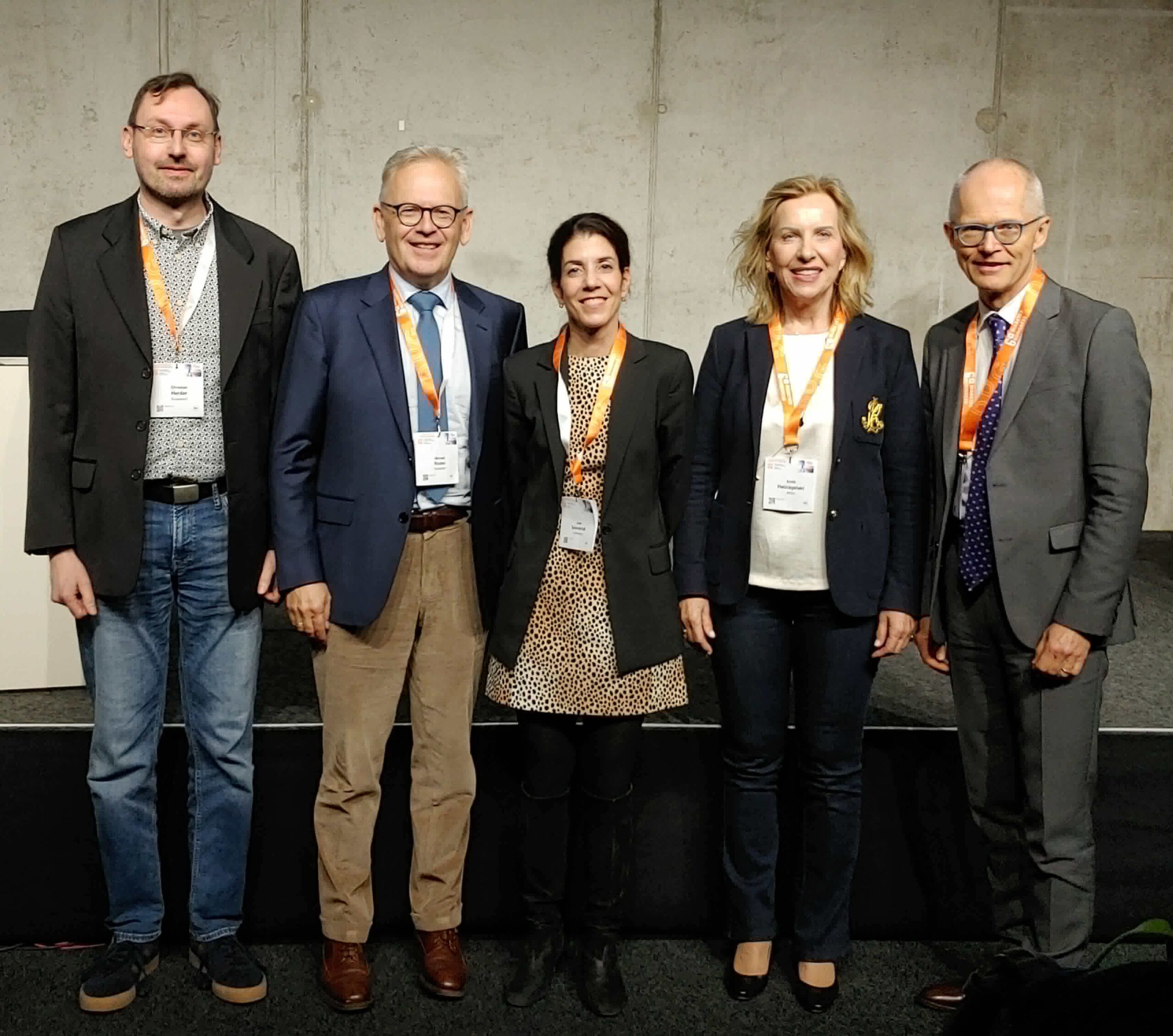
One of the symposia was again organised by CEDA and focused on “Therapy of diabetes-induced liver diseases“. Diabetes-related liver diseases are associated with a significant risk of further complications, yet they are often not treated adequately. This symposium aimed to provide an up-to-date overview of the advantages and disadvantages of the available treatment options and of new developments in this field. Session chairs were Professor Erifili Hatziagelaki (Athens, Greece) and Professor Christian Herder (Düsseldorf, Germany; CEDA Honorary Secretary).
Professor Thomas Stulnig (Vienna, Austria; CEDA Past-President) started the session with an update on the role of diet and lifestyle for metabolic dysfunction-associated steatotic liver disease (MASLD) and diabetes. He emphasised the high prevalence and poor prognosis of MASLD, particularly in people with type 2 diabetes. Diet and lifestyle can significantly improve MASLD, including histology, and a weight loss of ≥5 to 10% should be aimed at. Lifestyle changes should focus on dietary quality: avoid ultra-processed foods (UPFs) containing added sugar and saturated fat, prioritise Mediterranean-style diets, avoid alcohol in cases of advanced disease, add physical activity; coffee consumption of approximately three cups per day can serve as an add-on.
Prof. Erifili Hatziagelaki (Athens, Greece) discussed the link between thyroid function and MASLD, in particular the role of resmetirom. She started with on overview of the fundamental role of thyroid hormone signal transduction in the regulation of hepatic metabolism, followed by the clinical and pathophysiological relevance of thyroid dysfunction to the development and progression of MASLD. Resmetirom is the first targeted therapy available that addresses both the metabolic and histological aspects of the disease, and future developments are expected to open up additional therapeutic options.
Prof. Michael Roden (Düsseldorf, Germany; CEDA Congress President 2026) continued with an update on new incretin mimetics for people with diabetes and metabolic dysfunction-associated steatohepatitis (MASH). Randomised clinical trials indicate a correlation between weight loss and MASH resolution. There is also evidence of direct hepatic effect of GLP1-based drugs. Currently, resmetirom and semaglutide have been approved by the European Medicines Agency to treat MASH with fibrosis F2-F3. Several novel incretin-based drugs are currently being evaluated for MASH in clinical trials, including GLP-1/GIP dual agonists (tirzepatide), glucagon/GLP-1 dual agonists (e.g. survodutide) and tri-agonists.
In the final talk, Professor Julia Szendrödi (Heidelberg, Germany) discussed the effects of bariatric surgery on people with MASLD. MASLD comprises biologically distinct metabolic states, and recovery trajectories differ after bariatric surgery. Weight loss alone may not fully explain metabolic recovery, and mitochondrial adaptation as well as substrate flexibility may play additional roles. Ketogenic diets may further affect metabolic recovery. Taken together, bariatric surgery may restore metabolic adaptability rather than simply reduce liver fat.
CEDA thanks the German Diabetes Association (DDG) for the opportunity to organise CEDA symposia at the Diabetes Congress, and we are looking forward to future joint scientific discussions.
Prof. Dr. Christian Herder